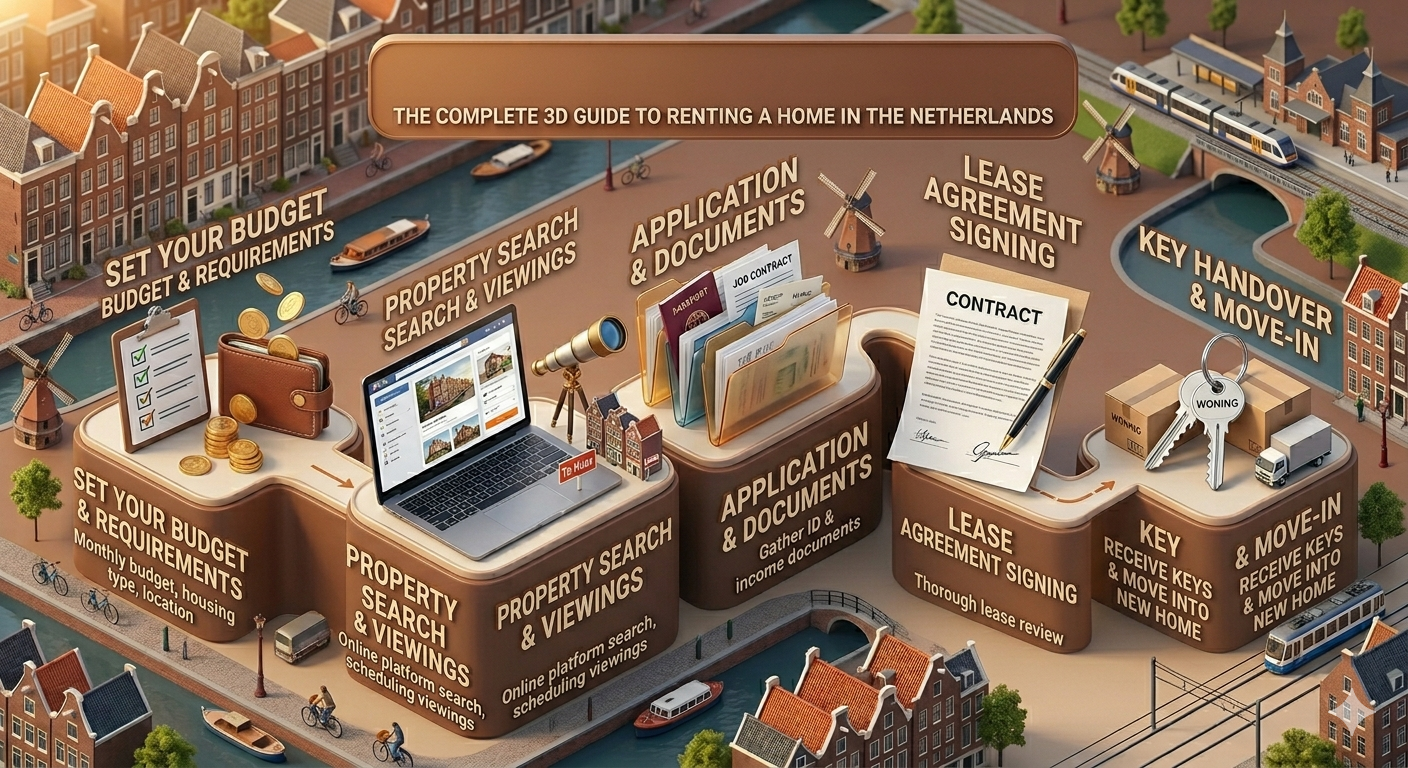
The Complete Guide to Renting a Home in the Netherlands: Essential Rules, Costs, and Mistakes to Avoid
⚠️ Disclaimer
This guide is intended solely to increase general awareness. Rental laws, contract requirements, and municipal regulations in the Netherlands may change, and every individual’s situation is different. For accurate and personalized advice, consult a legal expert, housing advisor, or rental specialist. All responsibility for reviewing contracts, documents, and final decisions rests with the tenant.
🏠 Comprehensive Guide to Renting a Home in the Netherlands
The Dutch rental market is one of the most competitive in Europe. Limited housing supply, strict regulations, and major differences between cities make it essential for newcomers and expats to understand how the rental process works. This guide covers the key information you need before signing any rental agreement.
📌 Types of Rental Housing in the Netherlands
The Dutch rental market is divided into two main categories.
1) Private Sector (Vrije Sector / Free Sector)
No government‑regulated price limits
Suitable for medium‑ to high‑income tenants
Highly competitive
Often semi‑furnished or fully furnished
More flexible contract terms
2) Social Housing (Sociale Huur)
Lower rent
Requires long‑term registration with official platforms
Waiting times can be several years
Designed for low‑income households
Stricter rules and eligibility requirements
🧾 Documents Required to Rent a Home
Landlords and agencies typically ask for:
Passport or residence permit
Employment contract or proof of stable income
Last three salary slips
BSN (citizen service number)
Recent bank statements
Sometimes a guarantor or higher deposit for newcomers
💶 Real Costs of Renting
Renting involves more than just the monthly payment. Expect:
Monthly rent (Huurprijs)
Deposit (Borg): usually 1–2 months’ rent
Service charges (Servicekosten)
Energy, water, and internet costs
Registration or platform fees (depending on the website)
Extra cost for furnished homes
🧱 Levels of Furnishing
Rental listings usually fall into one of three categories:
Kaal (Unfurnished): no flooring, curtains, or appliances
Gestoffeerd (Semi‑furnished): flooring, curtains, lighting, sometimes a washing machine
Gemeubileerd (Fully furnished): ready to move in, ideal for expats
🏦 Key Rental Laws You Should Know
Understanding Dutch rental laws helps prevent exploitation.
Important rules include:
Annual rent increases are regulated (especially in social housing).
A landlord cannot evict you without a legal reason.
All rental agreements must be in writing.
The Huurcommissie can review and lower rent if it is unfair.
For furnished homes, depreciation costs must be reasonable.
🧭 Essential Checks Before Signing a Contract
Always view the property in person.
Visit the neighborhood at different times of day.
Read the contract thoroughly.
Request an inventory list for all furniture and appliances.
Avoid paying any money before signing a contract.
Be cautious with short‑term contracts without clear justification.
Confirm that the landlord is legally allowed to rent out the property.
🧩 Common Mistakes New Tenants Make
Paying a deposit before signing a contract
Trusting listings without an address or real photos
Ignoring the termination clause
Accepting illegal or unregistered rentals
Not having liability insurance (Aansprakelijkheidsverzekering)
🛡 Tenant Rights in the Netherlands
Tenants have strong legal protections, including:
The right to a written contract
The right to receipts for all payments
The right to request rent review by the Huurcommissie
The right to a safe and habitable home
The right to receive the deposit back if no damage is present
🏙 Differences Between Cities
Rental conditions vary significantly across Dutch cities:
Amsterdam: most expensive and highly competitive
Rotterdam: more affordable with greater variety
The Hague: popular with families and government employees
Eindhoven: ideal for students and tech professionals
Utrecht: high demand, limited supply
🧭 Tips for Expats and Newcomers
Furnished homes are often the easiest starting point.
Short‑term contracts tend to be more expensive.
Use only reputable rental platforms to avoid scams.
Newcomers may be asked for a higher deposit.
Liability and home‑contents insurance are strongly recommended.
🛡 About Our Platform
Our platform is designed to make searching, filtering, and discovering rental homes easier and more efficient. The information provided is for general awareness only and does not replace professional legal or contractual advice. Tenants remain responsible for reviewing all documents and making final decisions. For any formal steps, consult a legal advisor or rental specialist.